India vs. Germany - an intercultural perspective
Getting Started
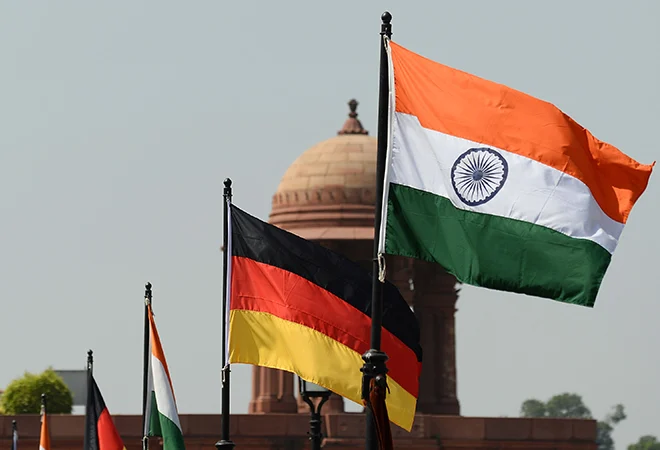
India meets Germany
The intersection of Indian and German professionals is more common than ever today. From the booming tech corridors of Bangalore and Pune to the engineering hubs of Stuttgart, these two economic powerhouses frequently collaborate, forming joint ventures, outsourcing partnerships, and vibrant multinational teams.
Yet, when the precision-driven, deeply structured culture of Germany meets the dynamic, highly adaptable, and richly diverse culture of India, the resulting friction can either spark extraordinary innovation or lead to profound frustration.
Navigating this intercultural exchange requires more than just good intentions; it demands a deep, empathetic understanding of the unwritten rules that govern how each society perceives time, communication, and trust.

The differences begin with communication
High context vs. low context communication
At the heart of this cultural contrast lies the fundamental difference in how each society processes information and builds relationships. Germany is a classic “low-context” culture, meaning that communication is expected to be explicit, transparent, and taken strictly at face value. The emphasis is on the task at hand, governed by a rigid adherence to rules and a monochronic view of time where schedules are fixed and punctuality is paramount.
India, conversely, thrives as a “high-context” culture. Here, the spoken word is often far less important than the surrounding context, body language, and the underlying relationship between the speakers. It is a highly polychronic society where time is fluid, adaptability is prized over rigid planning, and building personal trust is an absolute prerequisite to getting any actual business done.
Find out more about my intercultural communication trainings here.
Navigating the Dimensions of Difference
The Art of Communication: Directness vs. Diplomacy In Germany, the communication style is highly direct, fact-oriented, and explicitly designed to avoid ambiguity. If a project is running late or an idea is flawed, a German colleague will state this plainly, separating the critique of the work from the personal relationship with the individual. This approach (Sachorientierung, or task-orientation) can feel abrasive or confrontational to those unaccustomed to it. In contrast, Indian communication is deeply rooted in diplomacy and preserving group harmony. Saving face—both one’s own and the other person’s—is crucial. An outright “no” is often avoided; instead, an Indian professional might say, “We will try our best,” or “That might be difficult.” A German might misinterpret this as an agreement to proceed rather than a polite refusal. Reading between the lines is an essential skill when communicating in India, whereas in Germany, the lines themselves contain all the necessary information.
The Fluidity vs. the Rigidity of Time. Perhaps no cultural dimension creates more immediate friction than the concept of time. In the German professional sphere, time is a tangible resource to be managed, scheduled, and strictly adhered to. Meetings start at the exact minute they are scheduled, and deadlines are viewed as binding commitments. Punctuality is a sign of respect and professional competence. In India, time operates a lot more flexibly. Relationships and immediate circumstances often take precedence over the clock. A meeting might start late because a previous, important conversation needed to be concluded properly. Deadlines are sometimes viewed as aspirations rather than hard stops, reflecting a culture that has historically had to adapt to unpredictable infrastructures and rapidly shifting variables. For a German, an Indian colleague’s fluid approach to time can seem chaotic; for an Indian, the German obsession with the clock can appear incredibly rigid and lacking in human accommodation.
Hierarchy and Workplace Dynamics When looking at organizational structures, both cultures exhibit forms of hierarchy, but they manifest differently. German companies often feature decentralized decision-making with a strong emphasis on consensus and deep functional expertise. A German manager expects their team to speak up, offer counter-arguments, and take independent ownership of their specific tasks. Indian organizations traditionally lean toward a more pronounced, paternalistic hierarchy. The boss is expected to lead decisively, and subordinates may hesitate to contradict a senior figure openly, viewing such actions as disrespectful. However, while the structure in India is hierarchical, roles are incredibly fluid. Indian professionals are known for their “Jugaad” mindset—a flexible, innovative approach to problem-solving that easily crosses job descriptions to get things done. In Germany, roles are strictly defined, and stepping outside one’s designated area of responsibility without permission is often frowned upon.
The Foundation of Business: Task vs. Relationship. Ultimately, the greatest divergence lies in how business itself is initiated. For German professionals, the task is the foundation of the relationship. You prove your worth through reliability, competence, and the delivery of high-quality results; trust is built through your work. In India, the inverse is true: the relationship is the foundation of the task. Business is profoundly personal. An Indian counterpart wants to know who you are, what your values are, and whether you are trustworthy before they commit to a transaction. Taking the time for long lunches, inquiring about family, and engaging in small talk are not distractions from work in India—they are the critical work of building the trust necessary for future success.
These are just some of the cultural differences to consider when working across cultures. What have been your biggest intercultural challenges or triumphs? Share your own experiences in the comments below.
If you would like to train your teams on navigating these intercultural differences, book a call so that we can plan a training just for you.

Book a discovery call
Let’s have a 30 minute call to plan an intercultural communication training for your teams.